The Bishop and Open Diagonals: In order to obtain its full working force, a Bishop must be provided with open diagonals; here its long-range power can be put to good effect. The following game shows how the opening of an attacking diagonal can lead to an immediate decision.
Tag: Lessons
-
GTC Lesson 1: Basic Combinational Themes Material Vs. Time
The following is the first lesson from General Treatise on Chess by Roberto Grau (from now on referred to as GTC).
Material Vs. Time
Piece value is based on what the pieces are doing and not because the piece is on the board.
The following example shows how an advantage in time can be superior to a material advantage.
Schories vs. Spielmann Schevenningen 1905
 Black to move after move 12.
White is threatening to win a pawn after 13.Bxe4. Spielmann reasons that White’s lack of queenside development (the knight and bishop are still on the back rank) and a possible opening of the –file are worth more than a pawn, so he played 12…f5!. 13.exf6 e.p Qxf6 14.Bxe4 dxe4 15.Qxe4 Bb3! a magnificent maneuver. Spielmann takes away the c2 retreat from the Queen, and plans to gain time with Rac8. Notice how Black has all of his minor pieces in the game, and he will economically bring the rook into play. White on the other hand, has a knight on f3 which cannot move because of the threats against f2. 16. c4? A mistake. If you are behind in development you should avoid advancing pawns, because this leads to an additional loss of time. 16.Be3 was undoubtedly better. 16…Qd6 17.Nbd2 When you are behind in development you are at a much greater risk of being attacked. Because of this it is always prudent to simplify the position. Simplification favors the defender. For this reason 17.Qd5+ returning the material and leading to an inferior endgame is White’s best chance. 17…Rae8 18.Qb1. White has to continue relinquishing squares in order to maintain his material advantage. The situation is now becoming critical.
 White to move after move 18.
18… Nd4! Spielmann has managed to combine his space advantage with the weakness on f2. White cannot play 19.Nxd4 Qxd4 20.Nxb3 because of the pretty combination 20…Qxf2+ 21.Rxf2 Re1++. If 20.Nf3 Qxc4 with a clear advantage for White.
19. Ne4 Nxf3 20. fxg3 Qg6+ 21.Kh1 Rxf3A simple and definite maneuver that not only recovers the pawn for Black but also leads to a victory. If 22.Nxc5 Bc2 23.Qa2 Rxf2!, with an inevitable mate coming, and if 24.Rg1 Re1, etc.
22. Re1 Rxf2 23. Bg5 Qh5 24. Nf6+ gxf6 25.Rxe8 Kf7 0-1.
-
General Treatise on Chess
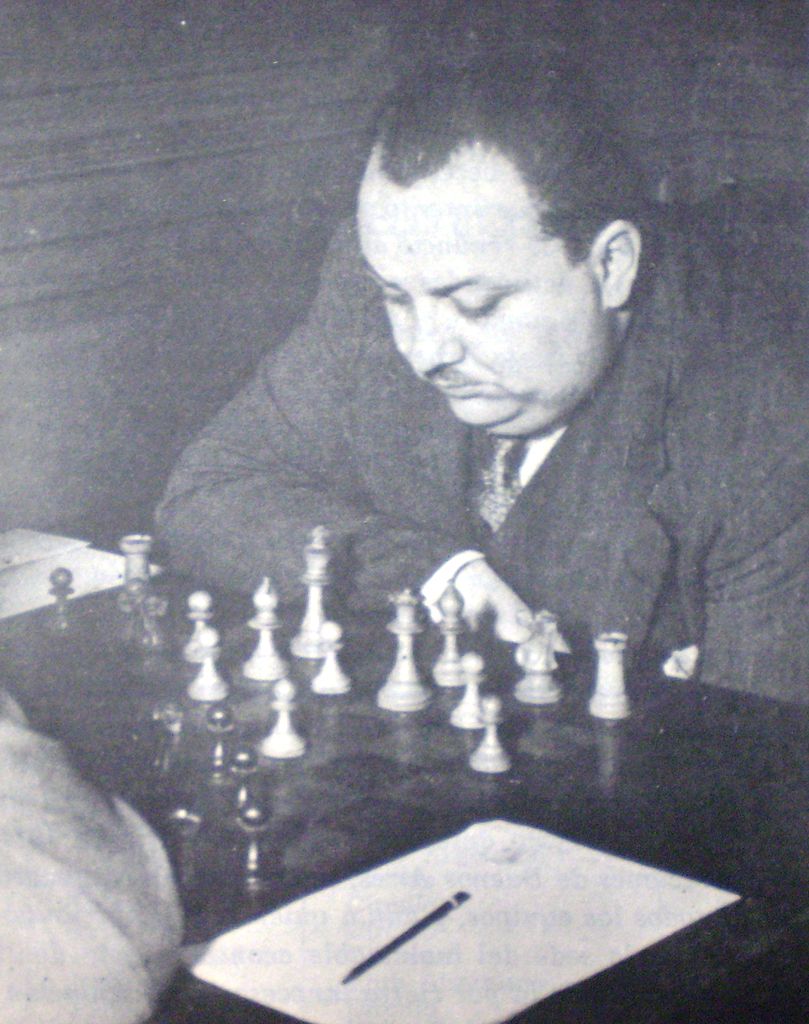
Recently a Spanish language set of four chess books by the name of el Tratado General de Ajedrez by Argentinian Chess Master Roberto Grau was recommended to me. The book has been called the Bible of Latin American Chess, and it is highly regarded among Latin American chess players.
Grau’s work which is composed of 4 volumes, is now out of print and was never translated to any other language. The 4 volumes cover the following themes:
1. Fundamentals
2. Tactics
3. Pawn Structures
4. Advanced StrategyLuckily I read spanish, so I will be using the books as part of my chess study, and I plan on translating and posting about it in future entries.
-
Playing Against an Outpost
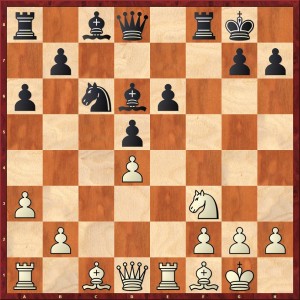
In the diagram White has an outpost on e5, but Ne5 can always be met by …Nxe5 and after recapturing with the pawn, White’s outpost is gone. White needs to bring another piece to bear on e5, so White to move would play 1.Bg5 and follow it up with Bh4 and Bg3. If on the other hand Black is on the move, he would seek to prevent this with 1…h6, or a more active solution 2…Qe8( so as to meet Bg5 with 2…Qh5! threatening Rxf3) or 1…Qb6. Either move gives Black a fine position.
If you are unable to cover your opponent’s outpost, then extremely active harassing tactics are needed.
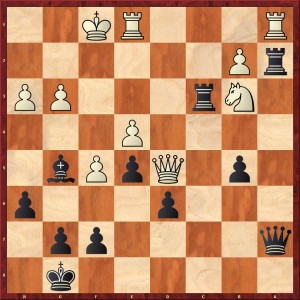
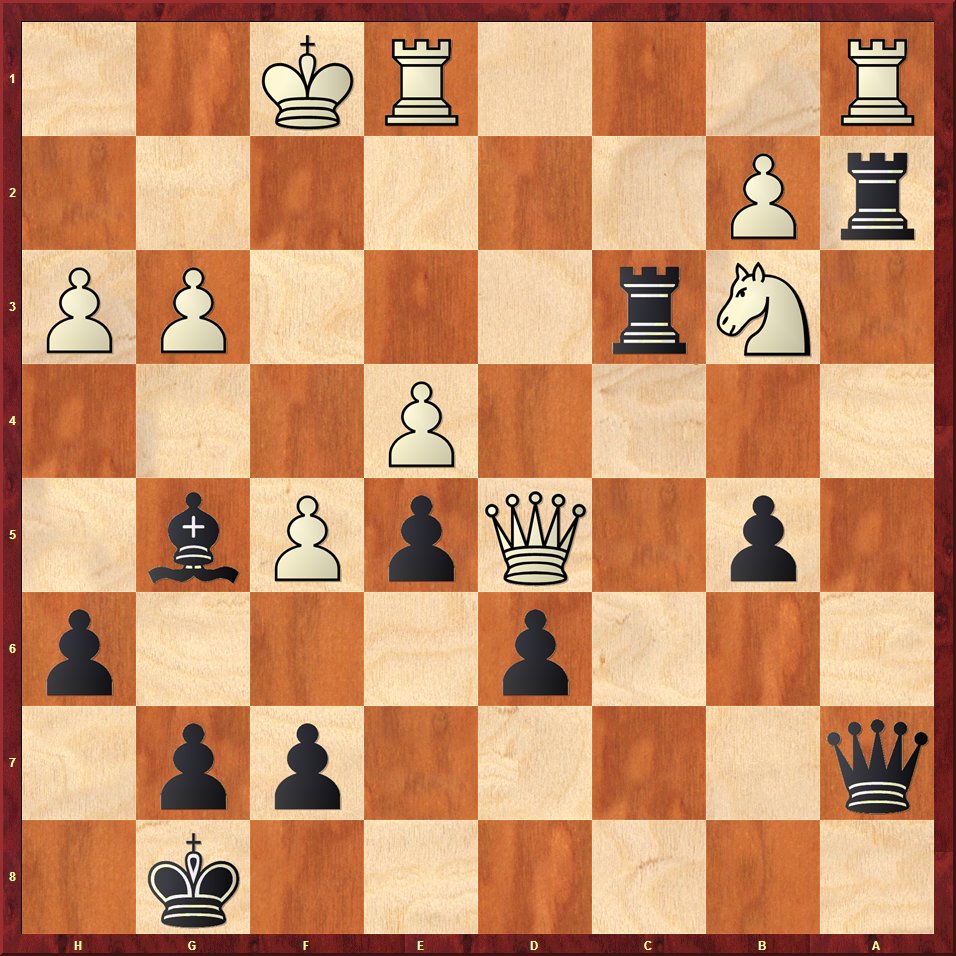
The diagram is from Unzicker – Fischer, Varna 1962. If you are unable to cover your opponent’s outpost, then extremely active harassing tactics are needed. In this position the White knight is at least four moves away from reaching d5, this gives Black some breathing room to prevent it, since after the White knight reaches d5 White is lost.
1… Ra4 Immobilizing the knight. 2. c3 Qa6 3. h3? Rc8 4. Rfe1 h6 5. Kh2 Bg5 6. g3 Qa7 7. Kg2 Ra2 8. Kf1 Rxc3! White resigns, as after 9.Rxa2 (9.bxc3 Qf2#) Rf3+ 10.Ke2 Rf2+ 11.Kd1 Qxa2 his position is wrecked.
The lessons to be learned here is that structure alone is not quite everything. The pieces must be able to coordinate with the pawn structure.
From Stean’s Simple Chess
-
The Philidor Position
The Lucena and Philidor positions are the most important positions to know when it comes to rook and pawn endings. Here we will be looking at the Philidor position, which allows Black to draw against an opponent that is up a pawn. It’s important to note that the Philidor position only works if the opponent’s pawn has not reached the 6th rank.

Black to move and draw1…Rb6 This move keeps that White King off the 6th rank. [2.Rg7 Ra6 3.Rg6 Rxg6 Heading into a drawn King and pawn endgame. 4.Kxg6 Ke7 ] The Black rook heads to the first rank, to begin checking the White King. With the White pawn having been pushed, White does not have any cover from the upcoming Black rook checks.
2.e6
3.Kf6 Rf1+ 4.Ke5 Re1+ 5.Kd6 Rd1+ =
-
The Outpost

The Outpost
The diagram shows that White has the center and the d-file. In other respects positions are equal. White with the move will attempt operations on the d-file. This presents difficulties since the protected Black pawn at d6 represents a “granite block”. The key move in this position is 1.Nd5 and the knight placed here we call the outpost. By outpost we mean a piece, usually a knight, established on an open file in enemy territory and protected by a pawn. The knight will exercise a disturbing influence due to his radius of attack and will cause the opponent to weaken their position in the d-file, in order to drive him away, by …c6.- An advanced outpost forms a base for new attacks
- An outpost provokes a weakening of the enemy’s position in the file in question.
from My System by Nimzowitch
-
Virtual Chess Coach – Part I
About the Virtual Chess Coach Program
This program is geared for my improvement (a 35 year old 1278 USCF rated player), but I hope that others in a similar situation will be able to derive benefit from it as well.
I will be modeling this program on the teaching’s of Dan Heisman. Dan Heisman is one of the best chess teacher’s in the United States and if you don’t already know this, then run to danheisman.com and check out his Novice Nook articles at Chess Cafe.
Now not all of us can afford a chess coach, so we will be using books and information available on the web (Heisman’s Novice Nook Articles) to create a virtual chess coaching experience. If you can afford a coach, then there is no substitute for the hands on feedback that they can provide but I’m aiming to make this the second best thing.
Things to know before we go on:
- This program is aimed at the adult beginner / intermediate player (ELO 1200 – 1700)
- Our chess philosophy will be based around Dan Heisman (with a sprinkle of Purdy and Silman for good measure)
Absolute Beginners
For complete beginner’s to chess Heisman recommends they start with The Complete Idiot’s Guide to Chess
and then go to a basic chess tactics book like John Bain’s Chess Tactics for Students. After doing this you should be approximately 1200 ELO and then this guide will be more useful to you.
The Assessment Phase
We need to assess our strengths and weaknesses, yet we are in no position to do so (how can we assess what we do not know / understand). This is one of the weaknesses of not having the feedback mechanism a coach provides. But do not fret, there is a great book that helps you assess your strengths and weaknesses in chess, and that book is Igor Khmelnitsky’s Chess Exam and Training Guide
Assessing Your Games
Another area where a coach can provide much needed feedback is in going over your games. Because we’ll be going at it on our own the following process is very important in order to get a close benefit to that of having a real coach.
- Go over all of your losses.
- Quickly re-play the game again making light annotations
- Go over the game in detail, and this time make extensive annotations and analysis
- Go over the game with a chess engine and compare your annotations with those of the engine
Key things to look for when annotating your game
You should jot these down as part of your annotations and include them in your chess notebook
- See where you could have improved in the opening
- Look for missed tactical opportunities (both defensive and offensive)
- Look for missed positional opportunities
- Look for missed opportunities in the endgame, if necessary refer to Mueller’s Fundamental Chess Endings
- Look for moves that caused a shift in the game based on the engine’s evaluation. (any move with an evaluation change greater than .35) and find out the root cause behind the evaluation shift, then go back to your annotations and make sure you address this and don’t forget to add this to your chess notebook.
The games you annotate and go over, should be standard time control games if possible. You should make an effort to play at least 1-2 standard games (>= G/30) per week. You can do this by either joining the Team 45 45 league, or playing ICC’s Standard Tourney or even playing at your local chess club. These games will give you more food for thought than quickly played blitz games, but if you do not have at least 1 standard game to go over, then do go over your well played blitz games (which is better than not going over your games at all).
Thought Process Before Lessons
There are certain bad habits that you should eliminate before you consider taking lessons, otherwise you would be throwing your money away. Most of these stem from careless play or hope chess .
- Do not leave pieces en prise
- Do not move quickly and without thought
- Perform a blundercheck before playing your move
Reference
The following books and websites will be used for this program:
Tactics
Chess Tactics for Beginners (Convekta)
Endgames
Silman’s Complete Endgame Course
Strategy
The Art of Logical Chess Thinking
Thought Process
Play
-
King and Pawn Endgame with Pawns on Both Wings
The following endgame example illustrates how to turn a one pawn advantage into a win:
The conversion of an extra pawn falls into three phases: 1) the King is activated. 1.Kf1

1…Ke7 2.Ke2 Kd6 3.Kd3 Kd5 2)Mobilization of the majority. 4.b4

Mobilize by moving the “candidate”, which is the unopposed pawn.4…Kc6 5.Kc4 h5 6.a4 h4 7.b5+ Kb6 8.Kb4 g5 9.a5+

9…Kb7 10.Kc5 Kc7 11.b6+ axb6+ 12.axb6+ Kb7

3) The King goes to the Kingside to gobble up the Black pawns (transformation of one advantage to another):13.Kd6 Kxb6 14.Ke7 f5 15.Kf6+- .
-
Triangulation
Triangulation refers to a King maneuver which aims to lose a tempo, and leave the opponent with the move. (Dvoretsky) The d5 and d7 square are in correspondence. White in this position can easily “lose” a tempo and place his opponent in zugzwang.

1.Ke5! Kc6 2.Kd4 Kd7 3.Kd5 White has acheived his aim, by creating a triange with his King. We are now back to the starting position, except that White now has the opposition and it is Black’s turn to move, and the rest is a matter of technique. 3…Kc8 4.Ke6! Attaining the diagonal opposition. 4…Kd8 5.Kd6 Attaining the vertical opposition. 5…Kc8 6.Ke7 Kb8 7.Kd7 Ka8 8.c6+-

Position after White’s 8th move.The game would continue as follows: bxc6 9.Kc7 c5 10.b7+ Ka7 11.b8Q+.
-
Key Squares
Key squares are squares whose occupation by the King assures victory, regardless of whose turn it is to move. (Dvoretsky)

White to move is a draw.
It is important to note that a pawn on the 4th rank or below has 3 key squares, whereas a pawn on the 5th rank or higher has six key squares.

A Pawn on the 5th rank or higher has 6 key squares.
In the example below the key squares are a6, b6 and c6. The key to winning in this position is for the White king to head to the square furthest away from the enemy King (a6), since that square will be the hardest to defend.

1.Kc2! Ke7 2.Kb3 Kd6 3.Ka4 (3.Kc4? Kc6=) 3…Kc6 4.Ka5 Kb7 5.Kb5 +- and Black is in zugzwang.


